


















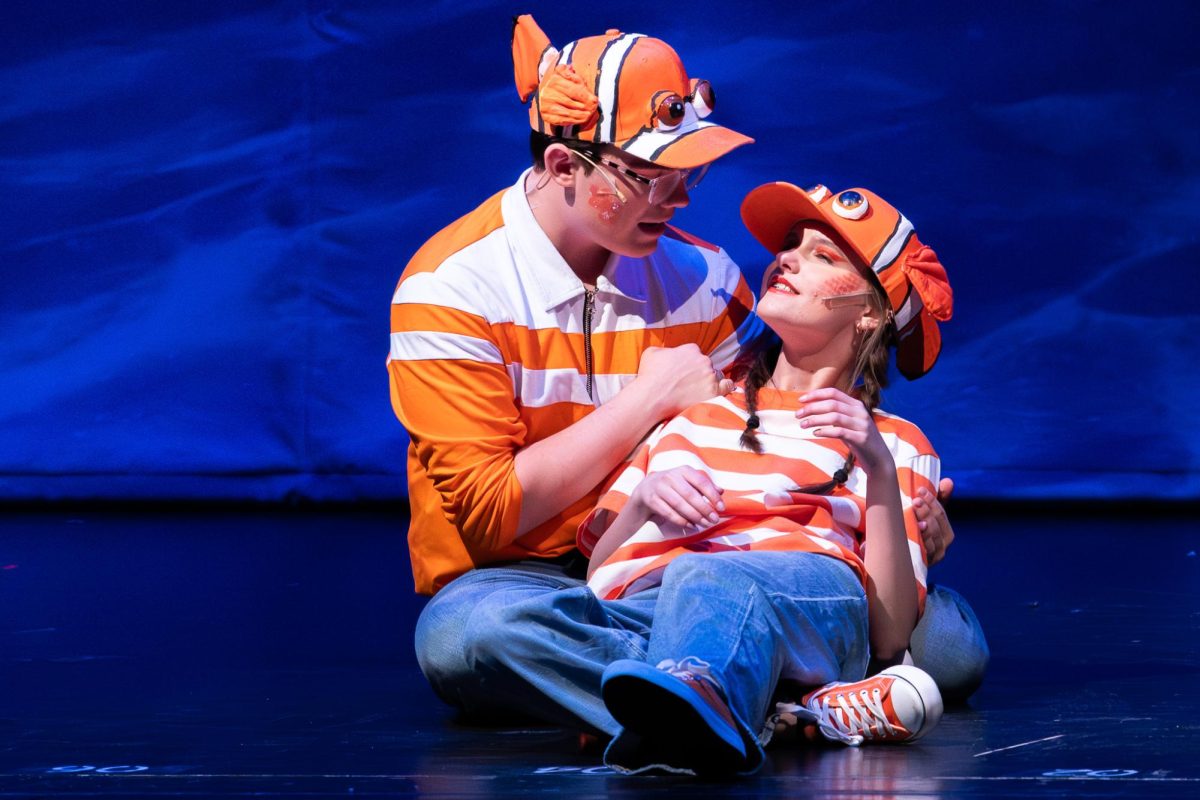
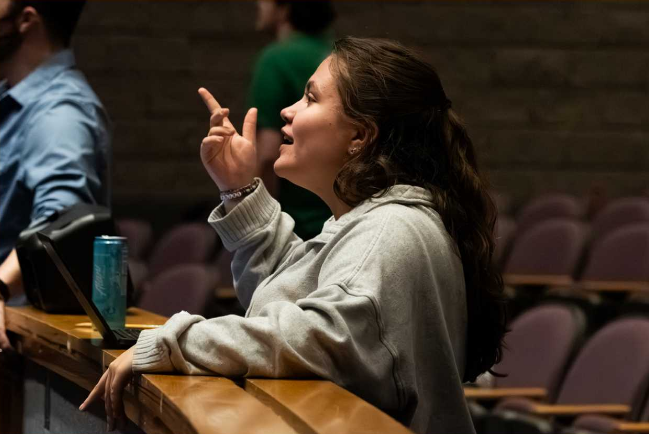










As Hello, Dolly! takes the stage and the actors take their bows, a crew unseen is scattered throughout the auditorium, taking the applause in as they appreciate the work that has gone into the show that they have spent so long preparing.
Though not the faces dotting the stage, the technical theatre crew behind Hello, Dolly!’s work is evident in sets, lighting, sound, props, and more.
“We couldn’t do the show without them. They piece all the extra elements together and make sure everything is where it needs to be. Lord knows the cast couldn’t do that themselves,” said junior Halle Duncan, an actress in Hello, Dolly!
Along with all the physical elements of the show, the technical theatre crew is also responsible for managing the timing and rehearsal process of the cast and set pieces. This primarily falls on the stage managers.
“I’m a stage manager, which means I go to all rehearsals and I run music and take notes, and I’m also there during the show running things backstage and making sure everyone is where they’re supposed to be, and transitions happen at the right time,” said senior Marita Smith.
In the process of stage managing, it is crucial for one to be organized and assertive. For some, this contributes to the job’s appeal.
“I’m bossy, so I kind of like to have the power, like being a stage manager allows me to make a lot of the bigger decisions. I feel more comfortable if I’m the one making the calls versus other people,” said senior Bailey Gilbert.
Like actors, some positions in the department of technical theatre are able to compete at various levels, even nationally. These competitions provide a means of recognition beyond what audiences in auditoriums can offer.
“I receive a lot of support, not only from my fellow people on crew, but my family also supports me for it, and then I’ve been recognized for it because I’ve competed at both the regional, state, and national levels, and I’ve won in all of those for stage management,” said Bailey.
As some rise through the ranks of national competitions, many underclassmen are still learning their footing in the roles they have in productions. Many, like freshman Reese Gilbert, are aiming higher as they look ahead to the years to come.
“I see myself taking more leadership roles next year, since a lot of stage managers are seniors,” said Reese.
In addition to a drive to rise through the ranks, many of these students are motivated by family connections.
“My sister has been the stage manager for the show since she started years ago, so that inspired me. I’ve also done theater since I was five, so I just wanted to try something at least,” said Reese.
While some have current connections in theater, other students are inspired generationally. Through exposure to the world of theater, new interests were formed.
“My mom was in theater when she was in high school. My sister did it, and so I knew I liked the community and seeing the show, so I was interested in being more part of it,” said Smith.
While the theatre environment can seem glamorous on stage, many in technical theatre are more often reminiscing about the work and long hours put into the show during the rehearsal process.
“I have to be at every single rehearsal, even though they last for a really long time, and I have to make sure that we have things that are needed for certain rehearsals and the show in general,” said junior Cheyenne Poynter.
Among the months of preparation, one week stands out as the most gruelling to almost everyone involved. Tech week is the last week of preparation for a production, where, each night, the full production is rehearsed from start to finish with every element of the show.
“Tech week is the longest week of your life. I don’t go home in between school and rehearsal, so I’ll get to school at seven, and I won’t leave until 10:30 every night,” said Bailey.
Tech week rehearsals, spanning five and one-half hours long each night, are tiring for both the actors, but also the crew.
“We run off energy drinks and we run the show every night stressed,” said Reese.
While stressful at times, the work of those in technical theatre goes unnoticed. Throughout the show-making process, directors show their appreciation for those willing to add their value to the production.
“Our directors are very grateful for the work that their students do and we get recognized as student leaders and as seniors that have been involved in the program for a long time,” said Smith.
While being recognized and honored by the directors, many members of technical theatre also feel supported by fellow students, both crew and cast.
“I get a lot of support from my mentors and then my assistant stage managers as well, because they’ve done more shows than I have, and also from the rest of the crew and the cast,” said Poynter.
When the curtain closes and time is up in their high school careers, seniors such as Bailey plan to take what they have learned as a leader in stage crew and make careers of that in the future.
“I never thought I was going to want to do anything with theater when I got to college, but I’m double majoring in production management, so I could be a company manager on a Broadway tour,” said Bailey.
All in all, while technical theatre is stressful business, it can also be extremely rewarding, not only teaching leadership and cooperation, but also providing pathways into what could be a fulfilling future. Hello, Dolly! premiers March 6 and closes on March 15.